Aankhen Poetry in Urdu: Best Shayari About Beautiful Eyes
Aankhen poetry holds a special place in Urdu and Hindi literature because eyes can express feelings without spoken words. Poets often describe eyes as mirrors of the heart, silent messengers of love, and deep oceans filled with hidden emotions.
Eyes may show happiness, sadness, love, anger, hope, or pain. This wide range of emotions makes them a powerful subject for poetry, ghazals, romantic quotes, and two-line shayari.
You May Like: zindagi poetry in urdu
What Is Aankhen Poetry?
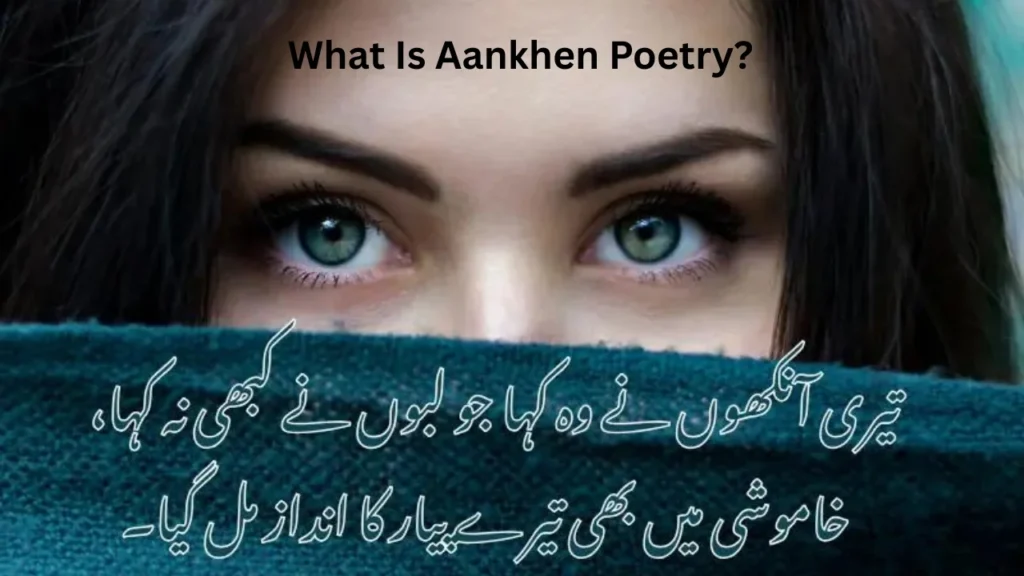
Aankhen poetry refers to poetic lines that describe the beauty, expressions, and emotional power of eyes. The word “aankhen” means “eyes,” while poetry may include a sher, ghazal, nazm, quote, or short verse.
This type of poetry does not only praise physical beauty. It also explains how a person’s eyes can reveal feelings that the lips may try to hide.
A poet may compare beautiful eyes with stars, flowers, oceans, rain, or moonlight. Sad eyes may represent heartbreak, loneliness, separation, or memories of a lost relationship.
Why Aankhen Poetry Is Popular
Eyes play an important role in human communication. A single look can show care, fear, trust, dislike, or attraction without the need for a long conversation.
This is one reason poetry about eyes feels personal and relatable. Readers can connect poetic lines with their own love stories, friendships, memories, and emotional experiences.
Urdu poetry has a rich tradition of using words such as aankhen, nigah, nazar, chashm, aansoo, kajal, husn, ishq, and mohabbat. Major Urdu poetry collections also treat eyes as a popular theme connected with beauty, love, complaint, attraction, and sorrow.
Social media has made eye poetry even more popular. People now use short shayari as WhatsApp statuses, Instagram captions, Facebook posts, and messages for someone special.
The Meaning of Eyes in Urdu Poetry
In Urdu poetry, eyes often carry a deeper meaning. They may represent the personality, emotional state, or hidden intentions of a person.
A poet may call the eyes honest because they reveal the truth. Even when a person smiles, their eyes may show the pain that exists inside the heart.
Eyes can also act as a symbol of attraction. Poets describe one beautiful glance as powerful enough to steal peace, change a life, or begin a love story.
In sad poetry, eyes often hold tears and memories. They become a place where the pain of separation stays alive, even after many years.
Aankhen Poetry About Love
Romantic eye poetry describes the silent connection between two people. It often shows how lovers understand each other through a simple glance.
Love does not always begin with a long talk. Sometimes, two people look at each other and feel an instant emotional connection.
Here are a few original romantic lines:
Teri aankhon mein mohabbat ka jahaan milta hai,
Mujhe har baar wahan apna makaan milta hai.
Teri nazron ne kaha jo tere lab keh na sake,
Hum bhi khamosh rahe aur sabhi raaz khule.
Un aankhon ko dekha to dil tham sa gaya,
Ek pal mein hi koi apna sa lagne laga.
These lines show how eyes may create trust and closeness. They also explain why poets call the eyes a language of love.
Romantic Aankhen Poetry for Someone Special
People often search for romantic poetry to send to a husband, wife, fiancé, crush, or partner. A short verse can express admiration in a soft and beautiful way.
Romantic shayari usually praises the colour, shape, brightness, or innocence of someone’s eyes. However, meaningful poetry also describes the peace and comfort a person feels while looking into those eyes.
Here are some original examples:
Tumhari aankhon ka jaadu bhi kamaal karta hai,
Yeh dil har baar tumhara hi khayal karta hai.
Teri aankhon mein jo dekha, woh kahin aur nahi,
Aisi masoom mohabbat ka koi chor nahi.
Aankhen teri jaise barsaat ki pehli boondein,
Dil ki mitti ko har mulaqat mein mehka dein.
Simple words often work better in romantic poetry. They sound natural and allow readers to feel the message without needing to understand difficult terms.
Sad Aankhen Poetry and Hidden Pain
Sad poetry about eyes focuses on tears, memories, loneliness, and broken trust. It shows how emotional pain may remain visible, even when a person tries to appear strong.
Many people hide their sadness behind a smile. However, their eyes may become quiet, tired, or filled with tears.
This contrast between a smiling face and sad eyes creates a powerful poetic image. It reminds readers that people often fight private battles that others cannot see.
Consider these original sad lines:
Chehra hans raha tha magar aankh ro rahi thi,
Ek yaad dil ke andar khamosh so rahi thi.
Aankhon mein nami thi par shikwa koi nahi,
Woh door ja raha tha aur roka bhi nahi.
Teri yaad jab bhi dil ke darwaze par aayi,
Meri aankhon ne chupke se ek baarish sajayi.
Sad eye poetry may help readers express emotions that are difficult to explain in normal conversation. It can also offer comfort by showing that heartbreak is a shared human experience.
Aankhen Poetry About Tears
Tears often appear in poetry as signs of pain, relief, regret, or deep love. They do not always mean weakness.
Sometimes, crying helps a person release feelings that have remained hidden for a long time. A tear may carry a complete story that words cannot explain.
Poets often compare tears with rain. Both fall quietly, wash away heaviness, and leave a different kind of silence behind.
Here are some original lines about tears:
Aansu bhi aankhon ki zubaan hote hain,
Khamosh rahein phir bhi bayaan hote hain.
Raat bhar aankhon se barsaat hoti rahi,
Dil ki har baat tere saath hoti rahi.
Aankhon ka paani kabhi jhoota nahi hota,
Dil sach mein toote to chehra nahi rota.
These verses show that tears may communicate grief more clearly than a long explanation.
Beautiful Eyes as a Symbol of Attraction
Beautiful eyes have inspired poets for generations. Their beauty may come from colour, brightness, shape, movement, or emotional warmth.
However, attractive eyes do not need to match one standard. Brown, black, blue, green, grey, small, large, bright, and sleepy eyes can all become poetic subjects.
What matters most is the feeling behind the gaze. Kindness can make ordinary eyes appear beautiful, while honesty can make them unforgettable.
Poets also describe the effect of kajal around the eyes. Kajal may increase their depth and make their expressions look stronger.
Original beauty poetry may include lines such as:
Kajal se nahi, teri saadgi se roshan hain,
Yeh aankhen tere dil ki roshni ka darpan hain.
Na rang ka sawaal hai, na roop ki baat hai,
Teri aankhon mein jo sach hai, wahi khaas baat hai.
Teri aankhen subah ki pehli roshni jaisi,
Saaf, narm aur dil ko chhoo lene wali.
Two-Line Aankhen Poetry
Two-line poetry is popular because it gives a complete message in a short form. Readers can easily remember, share, or use it as a caption.
A good two-line verse usually focuses on one main feeling. It may describe romance, sadness, beauty, trust, or separation.
Here are some original two-line examples:
Teri aankhon ko padha to yeh samajh aaya,
Khamoshi ne har sach humse keh diya.
Nazar mili to waqt ruk sa gaya,
Dil tha mera, par tera ho gaya.
In aankhon ne bahut khwab sajaye the,
Kuch tumne tode, kuch waqt ne mitaye the.
Aankhon mein basaya tha jise apna samajh kar,
Wohi chala gaya mujhe tanha chhod kar.
Tumhari nazar mein ajab si baat thi,
Ek pal ki mulaqat mein poori raat thi.
Short poetry works well when every word adds meaning. Unneeded words can reduce its emotional power.
Deep Poetry About Eyes and Silence
Silence is closely linked with eye poetry. When people cannot speak openly, their expressions may reveal their true feelings.
A silent look can become a request, promise, complaint, apology, or goodbye. Its meaning depends on the relationship and the situation.
This is why eye contact becomes an important poetic image. It allows a poet to describe a full conversation without using spoken dialogue.
For example:
Usne dekha bhi nahi, phir bhi sab keh diya,
Uski khamosh aankhon ne dil tod diya.
Nazar jhuki to haya ka paigham mila,
Nazar uthi to mohabbat ka naam mila.
Hum dono ke darmiyan alfaaz kam rahe,
Aankhon ke silsile magar raat bhar chale.
These lines show how silence can make a poetic moment stronger rather than weaker.
Eyes as the Mirror of the Heart
The phrase “eyes are the mirror of the heart” means that eyes often reflect true emotions. A person may control their words, but controlling every expression can be difficult.
Happy eyes look bright and active. Sad eyes may appear tired, wet, or distant.
A loving gaze feels warm and gentle. An angry gaze can feel sharp, while a fearful look may show doubt and discomfort.
Poetry uses these details to create clear emotional pictures. Readers imagine the face, the moment, and the relationship behind each line.
Common Themes Used in Eye Poetry
Different themes give eye poetry its emotional depth. Love remains the most common theme, but poets also connect eyes with many other experiences.
| Theme | Meaning in Poetry |
|---|---|
| Love | Attraction, care, and emotional connection |
| Tears | Sadness, regret, relief, or separation |
| Silence | Feelings that remain unspoken |
| Beauty | Physical charm and inner goodness |
| Memories | Moments from a past relationship |
| Waiting | Hope that someone will return |
| Betrayal | Broken trust and hidden truth |
| Dreams | Wishes, goals, and imagined happiness |
| Kajal | Beauty, depth, and cultural charm |
| Eye contact | A silent conversation between two people |
A poet can combine several themes in one verse. For example, a line may describe beautiful eyes that hide tears caused by separation.
Words Commonly Used in Aankhen Poetry
Writers can make poetry richer by using related words naturally. These words should support the emotion instead of appearing only for style.
| Word | Simple Meaning |
|---|---|
| Aankhen | Eyes |
| Nazar | Look or sight |
| Nigah | Gaze |
| Aansoo | Tears |
| Chashm | Eye |
| Kajal | Dark eye cosmetic |
| Mohabbat | Love |
| Ishq | Deep love |
| Hijr | Separation |
| Husn | Beauty |
| Khwab | Dream |
| Khamoshi | Silence |
| Shikwa | Complaint |
| Yaad | Memory |
| Dil | Heart |
These terms often appear in ghazals, songs, couplets, and modern captions. Their emotional meanings help writers create poetic depth with only a few lines.
How to Write Meaningful Aankhen Poetry
Start with one clear emotion. Decide whether you want to write about love, sadness, beauty, waiting, or a painful memory.
Next, imagine a specific moment. You may describe the first meeting, a silent goodbye, tears after separation, or a loving glance.
Use simple comparisons that readers can picture. Compare eyes with stars, rain, oceans, mirrors, night, flowers, or morning light.
Avoid adding too many decorative words. Poetry becomes more powerful when the message feels honest.
You should also read the verse aloud. This helps you check its rhythm, flow, and emotional effect.
Most importantly, write original lines based on your own idea. Copying famous verses can reduce trust and may cause copyright or plagiarism problems.
Aankhen Poetry for Social Media Captions
Social media users often prefer short poetry that fits easily into a post. The first line should gain attention, while the second line should complete the feeling.
A romantic photo may need a soft and loving caption. A black-and-white picture may suit sad or deep poetry.
Here are some original caption ideas:
Teri aankhon mein sukoon bhi hai aur shararat bhi.
Kuch chehre yaad nahi rehte, par unki aankhen rehti hain.
Dil ki baat aankhon tak aaye to ishq kehlati hai.
Meri khamoshi ko meri aankhon se padhna.
Teri ek nazar ne meri poori duniya badal di.
Aankhen band ki to bhi tera chehra nazar aaya.
These captions remain short, clear, and easy to understand. They can work with portraits, reels, stories, and status updates.
Difference Between Romantic and Sad Eye Poetry
Romantic poetry presents eyes as a source of peace, attraction, hope, and happiness. It usually creates a soft and positive mood.
Sad eye poetry connects them with tears, distance, loneliness, and unfinished relationships. Its mood feels heavier and more emotional.
| Feature | Romantic Eye Poetry | Sad Eye Poetry |
|---|---|---|
| Main emotion | Love and attraction | Pain and separation |
| Common images | Stars, moonlight, flowers | Rain, darkness, tears |
| Tone | Warm and hopeful | Deep and emotional |
| Purpose | Express admiration | Express hidden sorrow |
| Common setting | Meeting or eye contact | Goodbye or memory |
Both forms can be meaningful. The right style depends on the feeling a writer wants to communicate.
Cultural Value of Eye Poetry
Eye poetry remains closely connected with South Asian literary culture. Urdu and Hindi songs, films, ghazals, and traditional mushairas often use the beauty of a gaze as a central idea.
The subject works across generations because human expressions do not become outdated. People may change the way they communicate, but a loving or painful look still carries meaning.
Modern writers now combine traditional poetic words with simple daily language. This mixture makes eye poetry accessible to younger readers and people who do not fully understand formal Urdu.
Roman Urdu has also increased its reach. Readers can enjoy and share poetry even when they cannot read the Urdu script.
Frequently Asked Question
What is Aankhen poetry?
Aankhen poetry is a form of Urdu or Hindi poetry that describes eyes, beauty, love, tears, emotions, and silent feelings.
Why are eyes common in Urdu poetry?
Eyes are common in Urdu poetry because they can express love, sadness, anger, hope, and pain without using spoken words.
Can Aankhen poetry be romantic and sad?
Yes, Aankhen poetry can be romantic, sad, emotional, or deep. It depends on the mood and message of the poet.
Where can Aankhen poetry be used?
People can use Aankhen poetry in WhatsApp statuses, Instagram captions, Facebook posts, greeting messages, and personal notes.
How can I write original Aankhen poetry?
Choose one clear emotion, use simple words, add a natural comparison, and write lines based on your own feelings or imagination.
Final Thoughts
Eyes can communicate feelings that ordinary words may fail to explain. They hold love, pain, dreams, truth, memories, and countless silent stories.
Good poetry about eyes does more than praise beauty. It helps readers understand emotions, relationships, and the quiet moments that shape human life.
Whether it appears in a romantic message, sad status, two-line sher, ghazal, or social media caption, Aankhen poetry continues to touch hearts because every meaningful gaze has a story behind it.
People Also Read: urdu poetry for wife