Bewafa Poetry in Urdu Text: Original Shayari
Bewafa poetry in Urdu text gives words to the hurt of broken trust, distance, and unanswered affection. Below is a collection of original Urdu shayari on bewafai, written in a short, shareable style. Each verse is followed by Roman Urdu and a simple English sense so readers who cannot read the Urdu script can still understand its feeling.
In Urdu poetry, bewafa (بے وفا) usually describes someone who did not remain loyal or true to a promise of love. The word can express grief, complaint, resignation, or quiet self-respect. It does not always mean a literal act of betrayal; in poetry, it may also refer to emotional neglect, changing feelings, or a person who leaves without explanation.
You May Read: mother poetry in urdu text
Original bewafa poetry in Urdu text
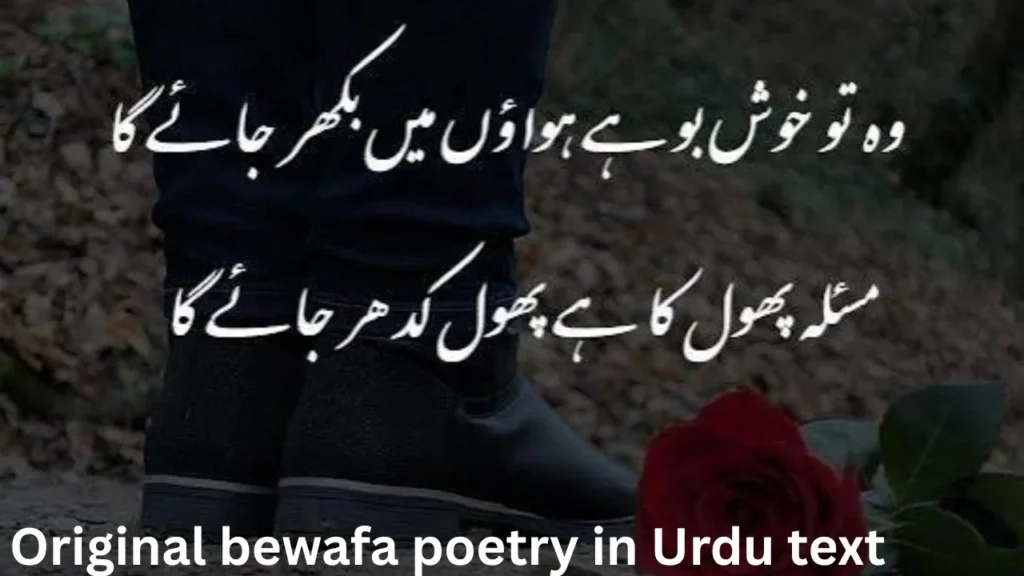
These short couplets are original compositions. They can work as a status, caption, message, or personal expression, but the strongest choice is the one that matches your real feeling without turning private pain into a public attack.
1.
تم بدل گئے تو ہمیں یہ گِلہ نہ رہا
ہم نے بھی دل کو تیرے نام سے جدا کر لیا
Tum badal gaye to hamein yeh gila na raha, hum ne bhi dil ko tere naam se juda kar liya.
When you changed, I stopped complaining; I also separated my heart from your name.
2.
بے وفائی کا ہنر تم نے کمال سے سیکھا
ہم نے بھی مسکرانا تیرے بعد سیکھا
Bewafai ka hunar tum ne kamaal se seekha, hum ne bhi muskurana tere baad seekha.
You learned betrayal remarkably well; I learned to smile after you.
3.
وہ وعدے بھی عجیب تھے جو تم نے کیے تھے
نبھانے کی باری آئی تو تم یاد نہ رہے
Woh waade bhi ajeeb thay jo tum ne kiye thay, nibhane ki baari aayi to tum yaad na rahe.
The promises you made were strange indeed; when it was time to keep them, you did not remember.
4.
دل نے جسے اپنی دعا سمجھا تھا
اسی نے ہمیں ادھورا سا کر دیا
Dil ne jise apni dua samjha tha, usi ne hamein adhoora sa kar diya.
The one my heart saw as its prayer left me feeling incomplete.
5.
تیری خاموشی نے سب کچھ کہہ دیا
اب لفظوں سے وفا کا ذکر نہ کر
Teri khamoshi ne sab kuch keh diya, ab lafzon se wafa ka zikr na kar.
Your silence said everything; do not speak of loyalty now.
6.
ہم نے تجھے کھونے کا غم کم کر لیا
تو نے ہمیں پانے کا حق کھو دیا
Hum ne tujhe khone ka gham kam kar liya, tu ne hamein paane ka haq kho diya.
I eased the grief of losing you; you lost the right to have me.
7.
رشتے ٹوٹے تو آواز نہیں آئی کوئی
بس دل کے اندر ایک شہر ویران ہوا
Rishte tootay to awaaz nahin aayi koi, bas dil ke andar aik shehar veeran hua.
When the relationship broke, there was no sound; only a city inside the heart became deserted.
8.
بے وفا کہہ کے تجھے بدنام نہیں کرنا
بس اتنا جان لیا، تو میرا نہیں تھا
Bewafa keh ke tujhe badnaam nahin karna, bas itna jaan liya, tu mera nahin tha.
I do not want to disgrace you by calling you unfaithful; I have simply learned that you were not mine.
9.
ہمیں چھوڑ کر وہ خوش تو بہت تھا
مگر ہماری دعا بھی اس کے ساتھ نہ تھی
Hamein chhor kar woh khush to bohat tha, magar hamari dua bhi us ke saath na thi.
They seemed very happy after leaving me, but my prayer no longer went with them.
10.
ایک شخص نے ہمیں اتنا بدل دیا
اب اعتبار لفظ ہے، عادت نہیں
Aik shakhs ne hamein itna badal diya, ab aitbaar lafz hai, aadat nahin.
One person changed me so much that trust is now a word, not a habit.
11.
تمہاری یاد سے لڑتے لڑتے
ہم نے خود کو اپنا بنا لیا
Tumhari yaad se larte larte, hum ne khud ko apna bana liya.
While fighting your memory, I learned to belong to myself.
12.
دل ٹوٹا تو شکایت بھی ختم ہو گئی
اب تم ملو بھی تو اجنبی لگتے ہو
Dil toota to shikayat bhi khatam ho gayi, ab tum milo bhi to ajnabi lagte ho.
When my heart broke, even the complaint ended; now, even if we meet, you feel like a stranger.
What “bewafa” means in Urdu poetry
بے وفا is made from بے, meaning “without,” and وفا, meaning loyalty, faithfulness, or keeping faith. In everyday speech, calling someone bewafa can be a serious accusation. In shayari, however, it often works as emotional imagery rather than a factual judgment.
A poet may call a beloved bewafa because they stopped replying, failed to keep a promise, chose another path, or became emotionally distant. The verse may be addressed to a lover, friend, memory, or even fate. That flexibility is one reason the word appears so naturally in sad Urdu poetry.
| Urdu term | Roman Urdu | Usual sense in poetry |
|---|---|---|
| بے وفا | Bewafa | Unfaithful; one who did not remain true |
| وفا | Wafa | Loyalty, faithfulness, keeping a bond |
| جدائی | Judai | Separation or parting |
| شکوہ | Shikwa | A complaint or hurt grievance |
| اعتبار | Aitbaar | Trust or confidence |
Short verses for a status or caption
Very short lines suit messaging apps and social posts. A brief verse can feel more restrained than a long public explanation.
13.
وفا کی امید ہم سے نہ رکھنا
ہمیں وفا والوں نے توڑا ہے
Wafa ki umeed hum se na rakhna, hamein wafa walon ne tora hai.
Do not expect loyalty from me without understanding; those who spoke of loyalty broke me.
14.
تم گئے تو کوئی شور نہ ہوا
بس ہم پہلے جیسے نہ رہے
Tum gaye to koi shor na hua, bas hum pehle jaisay na rahe.
There was no noise when you left; I simply was not the same afterward.
15.
جو دل میں اتر جائیں، وہی درد دیتے ہیں
Jo dil mein utar jaaen, wohi dard dete hain.
Those who enter the heart are the ones who can hurt it.
16.
اب کسی کے وعدوں پر دل نہیں ٹھہرتا
Ab kisi ke waadon par dil nahin thehrta.
My heart no longer rests on anyone’s promises.
17.
ہم نے خاموش رہ کر بھی بہت کچھ کہا ہے
Hum ne khamosh reh kar bhi bohat kuch kaha hai.
Even in silence, I have said a great deal.
18.
تیرا بدل جانا بھی ایک جواب تھا
Tera badal jana bhi aik jawab tha.
Your change itself was an answer.
Poetry that moves from pain toward self-respect
Sad shayari does not need to stay in anger. Many effective verses acknowledge the wound while protecting the speaker’s dignity. This tone is useful when the feeling is less about blaming someone and more about accepting an ending.
19.
ہم نے محبت کو سزا نہیں سمجھا
بس غلط شخص سے دل لگا بیٹھے
Hum ne mohabbat ko saza nahin samjha, bas ghalat shakhs se dil laga baithay.
I did not think love was a punishment; I simply gave my heart to the wrong person.
20.
تمہارا جانا ہمیں توڑ نہ سکا
ہاں، ہمیں اپنے قریب لے آیا
Tumhara jana hamein tor na saka, haan, hamein apne qareeb le aaya.
Your leaving could not break me; it brought me closer to myself.
21.
اب تیرے قصے میں ہم نہیں روتے
ایک سبق ہے، جسے یاد رکھتے ہیں
Ab tere qissay mein hum nahin rote, aik sabaq hai, jise yaad rakhte hain.
I no longer cry over your story; it is a lesson I remember.
22.
دل کی شکست بھی ضروری تھی شاید
ہم خود کو جیتنا بھول گئے تھے
Dil ki shikast bhi zaroori thi shayad, hum khud ko jeetna bhool gaye thay.
Perhaps the heart’s defeat was necessary; I had forgotten how to win myself.
How to choose the right verse
The most fitting shayari depends on the emotion behind it. A sharp line may suit anger, but it can feel harsh when the relationship ended quietly. Select wording that says what you mean without claiming more than you know.
- For disappointment: choose words about broken promises, silence, or changed behavior.
- For separation: use judai, memories, distance, and emptiness rather than direct blame.
- For a dignified ending: choose verses about acceptance, healing, and self-respect.
- For a brief caption: use a one-line thought that remains clear without explanation.
- For a personal message: prefer softer language and avoid posting private details.
Roman Urdu and spelling variations
Urdu script gives poetry its original visual form, while Roman Urdu makes it accessible to readers who use the Latin alphabet. Roman Urdu has no single fixed spelling system, so the same word may appear in several forms. For example, bewafa may also be written as be wafa or bewafaa; hai may appear as hy; and nahin may be written as nahi.
These variations do not necessarily change the meaning. For readability, it helps to keep one style throughout a post or collection. If the audience reads Urdu comfortably, use the Urdu script first and add Roman Urdu only where it adds value.
Sharing sad shayari with care
Poetry can express feelings that are difficult to say plainly, but public posts can also intensify a personal conflict. Avoid naming, tagging, or humiliating a person through a verse. A line focused on your own emotions is usually more thoughtful than one meant to provoke a reaction.
If a verse comes from a published poet, song, or book, credit the creator and do not present it as your own. The selections above are original, so they may be shared with an appropriate note if desired.
Frequently asked questions
What is the Urdu meaning of bewafa?
Bewafa (بے وفا) means unfaithful, disloyal, or not true to a bond. In poetry, it often describes emotional abandonment or an unkept promise.
Is bewafa poetry always about romantic love?
No. Romantic disappointment is common, but a verse may also speak about a friend, separation, trust, or life’s changing circumstances.
Can I use these lines as WhatsApp status or Instagram captions?
Yes. The short verses are suited to statuses and captions. Consider choosing a line that communicates your feeling without exposing another person’s private matters.
What is the difference between bewafa and bewafai?
Bewafa refers to a person described as disloyal. Bewafai (بے وفائی) refers to the act, quality, or experience of disloyalty.
Why does Urdu shayari use sadness so often?
Urdu poetry has a rich vocabulary for longing, separation, memory, and emotional restraint. Sadness is one important poetic mood, alongside love, humor, praise, devotion, and reflection.
A final word
Bewafa poetry in Urdu text is most powerful when it turns a difficult feeling into clear, graceful language. Whether you prefer a quiet complaint, a line about broken trust, or a verse of recovery, the best shayari leaves room for dignity as well as pain.