Sufi Poetry in Urdu: Best Two-Line Shayari on Ishq
Sufi poetry in Urdu is a beautiful form of literature that speaks about divine love, inner peace, faith, and the journey of the soul. It uses simple words, deep symbols, and emotional ideas to help readers understand their relationship with Allah.
This poetry does not only describe romantic feelings. It often uses human love as a symbol for spiritual love, while the beloved may represent the Creator, truth, or a higher purpose in life.
Sufi poetry has influenced Urdu literature for many generations. Its message still attracts readers because it teaches love, patience, kindness, humility, and freedom from pride.
You May Like: chaand poetry
What Is Sufi Poetry in Urdu?
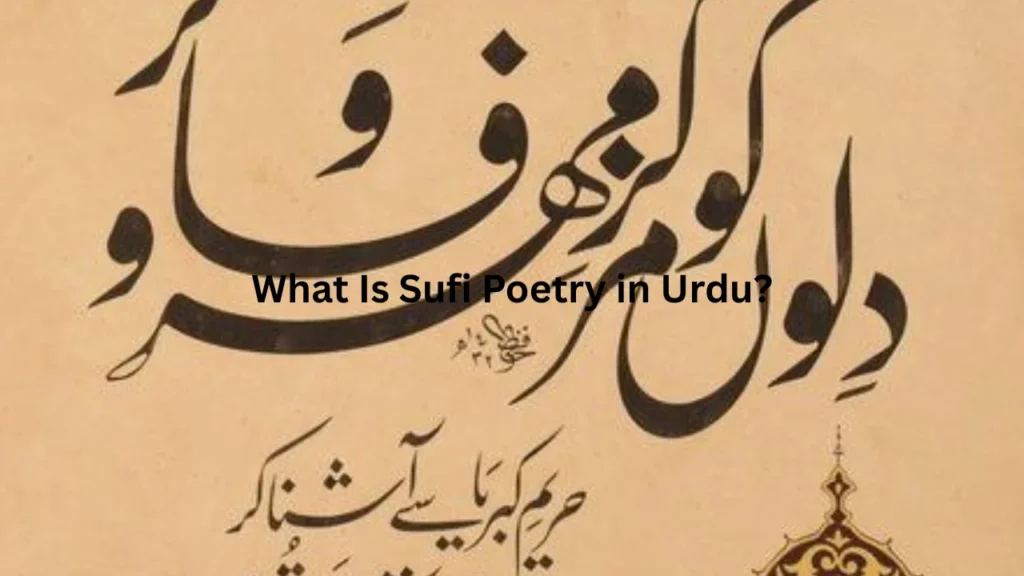
Sufi poetry is a form of spiritual writing connected with Tasawwuf, which is the inner and spiritual side of Islam. A Sufi poet often writes about cleaning the heart, controlling the ego, remembering Allah, and searching for truth.
In Urdu poetry, Sufi ideas appear in ghazals, nazms, couplets, rubaiyat, songs, and devotional verses. These poems invite people to look beyond wealth, social status, beauty, and other temporary parts of life.
Sufi writing often presents life as a journey. The human being is the traveller, the heart is the guide, and divine truth is the final destination.
Rekhta describes Sufi thought in Urdu poetry as a search for a personal connection with the divine through self-purification, reflection, and spiritual awareness.
The History of Sufi Poetry and Urdu Literature
Sufi poets played an important role in the growth of South Asian literature. They shared spiritual ideas in languages that ordinary people could understand instead of limiting their message to royal courts or scholars.
Early Sufi writers used Persian, Arabic, Hindavi, Punjabi, Sindhi, and other regional languages. As Urdu developed, many of their ideas, symbols, stories, and poetic styles became part of Urdu literature.
This is why readers may find Urdu versions of poems that were first written in Persian, Punjabi, Saraiki, or Sindhi. These translations allow a wider audience to understand the spiritual meaning of famous Sufi works.
Sufi literature has historically used folk songs, teaching stories, parables, and familiar poetic forms to make difficult spiritual ideas easier for the public.
The Role of Amir Khusrau
Amir Khusrau holds an important place in the literary and musical history of South Asia. He lived from 1253 to 1325 and became a devoted follower of Hazrat Nizamuddin Auliya.
He wrote mainly in Persian and also used early Hindavi language. His work helped create a bridge between different cultures, languages, musical traditions, and spiritual communities.
Many readers connect Amir Khusrau with the early roots of Urdu and Hindavi poetry. His verses often express devotion, separation, love for the spiritual guide, and the wish to become close to the divine.
Sufinama describes Amir Khusrau as a celebrated Sufi poet, musician, and disciple of Nizamuddin Auliya.
Main Themes in Sufi Poetry in Urdu
The value of Sufi writing comes from its universal themes. A reader does not need advanced knowledge of philosophy to understand its basic message.
The following themes appear regularly in spiritual Urdu poetry:
| Sufi poetry theme | Simple meaning |
|---|---|
| Ishq-e-Haqiqi | True or divine love |
| Self-purification | Removing pride, greed, and hate |
| Fana | Letting go of the selfish ego |
| Spiritual union | Feeling close to the Creator |
| Patience | Remaining strong during hardship |
| Humanity | Respecting and serving other people |
| Inner awakening | Understanding the truth within the heart |
| Separation | The soul’s longing for divine closeness |
Divine Love
Divine love is the central subject of many Sufi poems. The poet describes a strong desire to meet, know, or become close to the true Beloved.
This love asks for honesty and sacrifice. A person must remove pride, jealousy, greed, and hatred before experiencing real spiritual peace.
The Battle Against the Ego
The ego often appears as the biggest barrier on the spiritual path. It makes people feel superior, selfish, angry, or hungry for praise.
Sufi poets encourage readers to recognise these weaknesses. They teach that real greatness comes through humility, good character, and service to others.
Separation and Longing
A Sufi poet may describe tears, loneliness, distance, or a restless heart. These feelings often represent the soul’s separation from divine truth.
The pain of separation is not always negative. It may push a person to pray, reflect, improve their behaviour, and search for a deeper purpose.
Unity and Humanity
Many Sufi poems encourage respect for all people. They question divisions based on wealth, social class, language, race, or family background.
The spiritual message remains clear: a pure heart matters more than an impressive appearance. Love and kindness bring people together, while pride creates distance.
Famous Poets Connected with Sufi Thought
Many poets contributed to mystical literature in Urdu and other South Asian languages. Some wrote directly in Urdu, while others became popular through Urdu translations and performances.
Khwaja Mir Dard
Khwaja Mir Dard is one of the best-known mystical poets of classical Urdu literature. His poetry combines emotional beauty with spiritual reflection.
He often writes about divine presence, the weakness of the human mind, the mystery of existence, and the desire to understand truth. His verses remain popular among readers of classical Urdu ghazal.
Rekhta’s Tasawwuf collection includes several ghazals and couplets by Khwaja Mir Dard, showing his major place in Urdu mystical poetry.
Allama Muhammad Iqbal
Allama Iqbal used poetry to discuss faith, action, self-respect, spiritual growth, and the future of the Muslim community. His concept of Khudi teaches people to strengthen their character through faith and meaningful action.
Iqbal did not support laziness or escape from the world. He encouraged people to gain knowledge, work with courage, understand their purpose, and develop a strong moral identity.
His poetry often combines philosophy with simple images such as the eagle, mountains, stars, deserts, and long journeys. These images make his message powerful and memorable.
Bulleh Shah
Bulleh Shah mainly wrote in Punjabi, but his poetry is widely available in Urdu script and Urdu translation. His kafis question hypocrisy, pride, false religious appearance, and social division.
His message focuses on self-awareness and sincere love. He teaches readers to examine their own hearts before judging other people.
Urdu poetry collections often place Bulleh Shah beside Waris Shah and Khawaja Ghulam Fareed because their Sufi messages remain highly popular among Urdu readers.
Maulana Jalaluddin Rumi
Rumi wrote mainly in Persian, yet his poetry has gained great popularity among Urdu readers. His works discuss love, spiritual growth, loss, patience, self-knowledge, and closeness to Allah.
Readers should remember that Rumi’s poetry has a strong Islamic and Quranic background. Some modern versions remove this context and present his work as general motivational writing.
Rumi’s famous Masnavi contains many religious stories, Quranic references, and moral lessons. Understanding that background helps readers receive a more accurate meaning from his poetry.
Sultan Bahu and Khawaja Ghulam Fareed
Sultan Bahu wrote spiritual poetry in Punjabi, while Khawaja Ghulam Fareed became famous for Saraiki kafis. Both poets expressed divine love, surrender, spiritual longing, and the search for truth.
Their poetry became popular through oral recitation and Sufi music. Today, many readers enjoy their verses in Urdu script, Roman Urdu, translations, and musical performances.
Symbols Used in Sufi Poetry in Urdu
Sufi poets use symbols because spiritual experiences can be difficult to describe directly. A symbol allows the poet to give several meanings through one image.
For example, the word beloved may refer to a human being in one poem. In another poem, it may represent Allah, spiritual truth, or a guide who leads the seeker towards knowledge.
| Common symbol | Possible spiritual meaning |
|---|---|
| Beloved | Allah or divine truth |
| Lover | The spiritual seeker |
| Wine | Divine love or spiritual joy |
| Cup | The human heart |
| Light | Knowledge and guidance |
| Darkness | Ignorance or distance from truth |
| Journey | Spiritual development |
| Desert | Hardship, patience, or loneliness |
| Mirror | The condition of the heart |
| Fire | Love, purification, or strong desire |
| Ocean | Unlimited divine knowledge |
| Drop | The individual human soul |
Readers should not always take these symbols in a physical sense. Their meaning depends on the complete verse, the poet’s background, and the main subject of the poem.
Popular Forms of Sufi Shayari
Sufi poets use several poetic forms to deliver their message. Each form has a different structure, sound, and emotional effect.
Ghazal
A ghazal contains separate couplets connected through rhythm, rhyme, or a shared mood. It commonly discusses love, pain, separation, beauty, and spiritual longing.
The same couplet may appear romantic to one reader and spiritual to another. This double meaning gives the Urdu ghazal its special depth.
Kafi
Kafi is strongly linked with Punjabi, Sindhi, and Saraiki Sufi traditions. It often uses simple language, repeated lines, and a musical rhythm.
Singers commonly perform kafis at shrines, cultural gatherings, and Sufi music events. The repeated words help listeners remember the spiritual lesson.
Rubai
A rubai is a four-line poem that presents a complete idea in a short form. It may discuss life, death, love, time, fate, or the human relationship with the Creator.
Its short structure makes it suitable for sharing, learning, and reflection.
Nazm
A nazm develops one main topic from beginning to end. Unlike a ghazal, its verses usually remain connected through a clear subject.
Modern poets often use nazm to discuss self-discovery, social responsibility, faith, and personal spiritual experience.
Qawwali
Qawwali combines devotional poetry with music and powerful vocal performance. It often includes Persian, Urdu, Punjabi, or Hindavi verses.
The lead singer may repeat an important line to increase its emotional effect. Handclaps, supporting voices, and musical instruments create a strong sense of energy.
Sufi Poetry and Spiritual Music
Music has helped Sufi poetry reach people who may not regularly read books. Singers turn classical verses into emotional performances that listeners can understand and remember.
Artists such as Nusrat Fateh Ali Khan, Abida Parveen, Pathanay Khan, and many others have performed poetry connected with famous Sufi saints. Their voices introduced spiritual literature to international audiences.
However, listeners should also read the full poem when possible. A musical performance may repeat only selected verses and leave out the wider meaning.
Why Sufi Poetry in Urdu Remains Popular
Modern life often creates stress, loneliness, competition, and emotional pressure. Sufi poetry offers a calm message that asks people to slow down and examine their inner condition.
It reminds readers that money and social praise cannot provide lasting peace. A peaceful heart grows through faith, gratitude, patience, forgiveness, and good behaviour.
Social media has also introduced Sufi shayari to younger readers. Short couplets now appear in videos, status updates, captions, and poetry images.
Current search results commonly feature Urdu script, Roman Urdu translations, two-line shayari, spiritual quotes, divine love, and shareable status poetry.
How to Understand Sufi Poetry More Easily
Start by reading the poem slowly. Do not decide its meaning after reading only one line.
Pay attention to words such as ishq, yaar, hijr, visaal, roshni, dil, safar, khudi, fana, and haq. These words often carry deeper spiritual meanings.
Learn basic information about the poet’s life and language. A Punjabi kafi, Persian ghazal, and classical Urdu verse may use different cultural symbols.
Compare the original script with a trusted translation. Roman Urdu helps with reading, but it may not fully show the pronunciation and beauty of the original language.
Most importantly, connect the poem with its complete spiritual message. Avoid treating every line as a simple romantic quote.
Lessons Readers Can Learn from Sufi Shayari
Sufi poetry teaches people to become aware of their own weaknesses. It tells readers to correct themselves before pointing out the faults of others.
It also teaches that love requires action. A person cannot claim spiritual love while treating other people with cruelty, dishonesty, or disrespect.
Another lesson involves patience during hardship. Sufi poets often describe pain as a stage of growth rather than the end of hope.
The poetry also supports simple living. It warns people that constant desire for wealth and praise can make the heart restless.
Sufi Poetry in Urdu and Modern Readers
Young readers now access poetry through websites, mobile apps, videos, audiobooks, and social media pages. Digital access has made rare poetry collections easier to discover.
Online collections also allow readers to view Urdu, Hindi, and Roman scripts. Sufinama, for example, presents ghazals, Persian kalam, rubaiyat, and other Sufi works in several readable formats.
Still, readers should check the poet’s name and source before sharing a verse. Social media pages sometimes attach famous names to lines written by unknown or modern writers.
Accurate attribution protects literary history. It also helps readers find the complete work and understand the original meaning.
Frequently Asked Questions
What is the main message of Sufi poetry?
Its main message focuses on divine love, inner purification, humility, and closeness to Allah. It encourages readers to remove pride and treat others with kindness.
Is all love poetry considered Sufi poetry?
No, not every romantic poem carries a spiritual meaning. Sufi poetry normally uses love to discuss the soul, divine truth, self-purification, or a spiritual journey.
Which poets are famous for Sufi shayari?
Amir Khusrau, Khwaja Mir Dard, Bulleh Shah, Sultan Bahu, Rumi, Khawaja Ghulam Fareed, and Allama Iqbal are often connected with mystical thought. Some wrote in languages other than Urdu but became popular through Urdu script and translation.
Why do Sufi poets use the word wine?
Wine often works as a poetic symbol for divine love, spiritual joy, or a state of deep devotion. Readers should understand it according to the complete poem rather than its literal meaning.
Can Roman Urdu explain Sufi poetry correctly?
Roman Urdu makes pronunciation easier for people who cannot read Urdu script. However, readers may need a proper translation or explanation to understand difficult spiritual terms.
Conclusion
Sufi poetry carries a message that remains meaningful in every age. It asks people to clean their hearts, control their ego, love humanity, remain patient, and search for a sincere connection with the Creator.
Its symbols, emotional language, musical quality, and spiritual lessons make it different from ordinary romantic verse. Readers can gain deeper value by studying the poet, understanding key terms, and reading each poem in its complete context.
In a world filled with stress and division, Sufi poetry in Urdu continues to guide readers towards divine love, inner peace, humility, hope, and respect for all human beings.
People Also Read: happy birthday poetry in urdu