Is That Herpes or an Ingrown Hair?
Have you noticed a bump or blister in your genital area? If so, you’re probably panicking. Before doing so, it’s helpful to know the difference between genital herpes and an ingrown hair.
Genital Herpes
When distinguishing between ingrown hair vs. herpes, it’s helpful to understand the causes of each. A herpes outbreak develops when a person is exposed to one of the herpes simplex viruses. Approximately 20% of American adults today have herpes simplex virus type 2, also known as HSV-2. However, HSV-1, which is responsible for oral herpes in the form of cold sores and fever blisters, is becoming more common in the genital area.
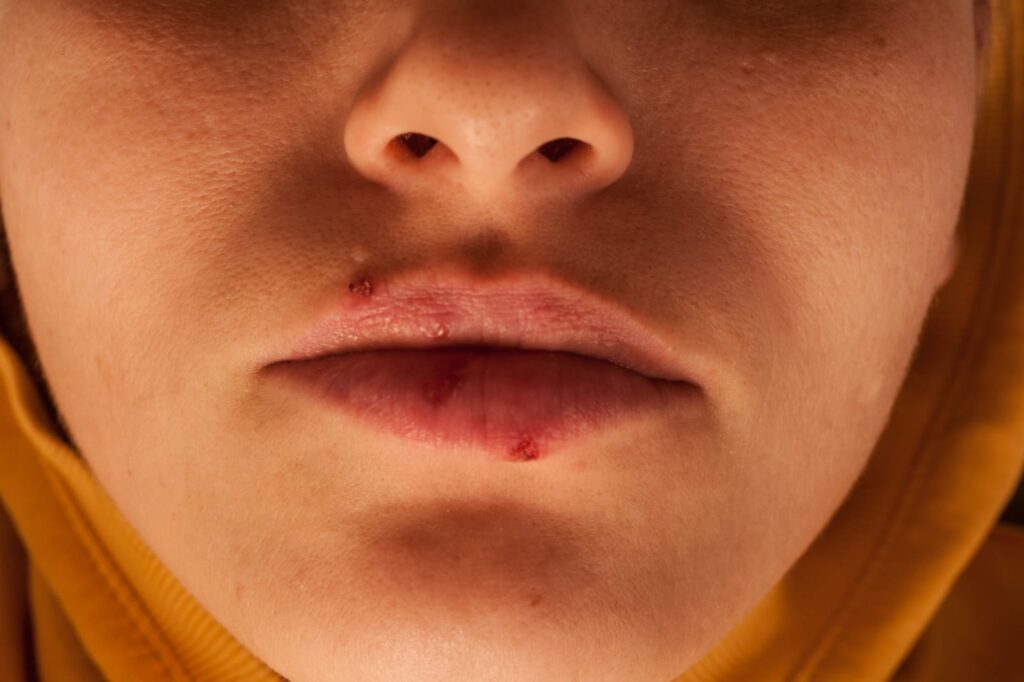
Genital herpes is characterized by blisters or lesions that grow in clusters. These sores or lesions are usually smaller than 2 mm. You may have repeated outbreaks and a yellow discharge if any of the lesions burst. The sores may be tender when touched, and you might have a headache or fever.
This condition is sexually transmitted, and HSV-1 can be shared through kissing. Some people have this disease and never have symptoms. In fact, the virus can remain dormant for years with no symptoms. On the other hand, a person may contract the virus and have multiple outbreaks in the first year. However, the symptoms typically decrease after the first outbreak.
Researchers have yet to find a cure for this disease. They don’t have a treatment for the sores when they erupt. The best course of action is for the doctor to provide antiviral medication to suppress these outbreaks. Individuals who take the medication often find their outbreaks are less severe or don’t last as long.
Ingrown Hair
An ingrown hair will leave a red, tender bump around your genitals. Razor burn can also lead to small bumps and blisters. When a hair grows, it pushes through the skin. If a hair cannot do so because the follicle is blocked or it’s growing in an unusual direction, an ingrown hair may develop.
With an ingrown hair, there will only be one sore or bump that is small and red. The bump actually looks like a pimple and may be tender. These bumps often itch and lead to inflammation or soreness. If you squeeze the bump, white pus will appear.
Any method of hair removal commonly used in the genital area can lead to ingrown hairs. However, some hairs just don’t grow in the usual way. As a result, a person can develop an ingrown hair at any time.
If the hair follicle is blocked, it can lead to ingrown hair, as the follicle may develop an infection. When this happens, the white bumps on the surface will be filled with pus. The area will be more irritated and sorer.
If possible, have someone inspect the ingrown hair. A shadow or thin line should be visible in the center of the bump. The shadow or line is the hair. However, if it is not present, it could still be an ingrown hair, and these hairs typically resolve on their own.
If you have a single bump that resolves within a few days, it’s likely an ingrown hair. Washing the area when showering helps remove any dead skin cells that may be blocking the follicle. Removing these skin cells will allow the hair to push through the skin, leading to the symptoms disappearing.
Genital herpes may disappear after a few days or weeks, but you are likely to have another outbreak. Some people experience regular outbreaks, while others have only a few each year. If the bumps remain for more than two weeks, it’s time to see a doctor.